The Biggest Law Firm SEO Mistakes I See (And How to Fix Them)
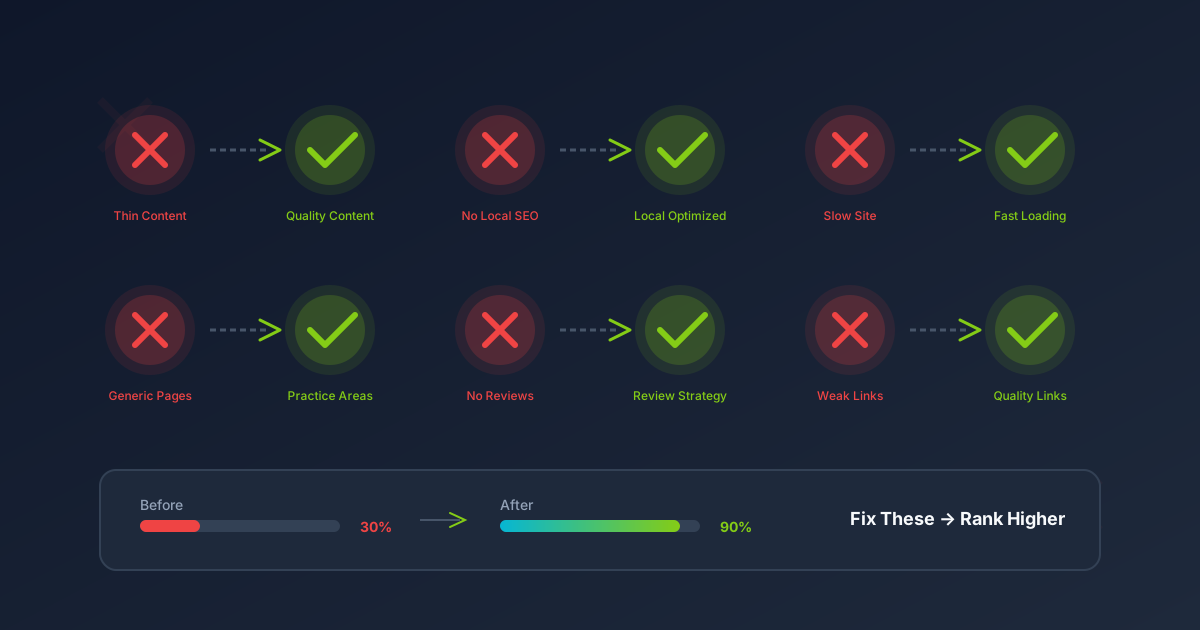
Quick summary from Casey — under 30 seconds
Over 15+ years as a legal SEO specialist, I’ve audited hundreds of law firm websites. The same mistakes appear again and again, mistakes that cost firms rankings, traffic, and ultimately cases. Here are the most damaging errors I see and exactly how to fix them.
Mistake 1: Keyword Stuffing in Practice Area Pages
The Problem: This common SEO error persists. Many law firms still write practice area pages like this:
“Our Dallas personal injury lawyers are the best personal injury attorneys in Dallas. If you need a Dallas personal injury lawyer, our personal injury law firm in Dallas can help.”
This outdated approach hurts rankings. Google’s algorithms have been penalizing keyword stuffing for over a decade.
The Fix: Write naturally for humans. Use your target keyword a few times where it fits naturally, but focus on providing genuine value. Vary your language with synonyms and related terms. Google understands context. You don’t need to repeat the exact phrase twenty times.
A better approach:
“After a serious accident in Dallas, you need attorneys who understand both the legal complexities and the personal toll of what you’re facing. Our personal injury team has secured millions in compensation for accident victims across North Texas.”
Mistake 2: Thin Content on Practice Area Pages
The Problem: Thin content is another major issue. I regularly see practice area pages with 200-300 words of generic content. These pages answer none of the questions potential clients actually have.
The Fix: Create comprehensive practice area pages that demonstrate expertise. Aim for 1,500+ words covering:
- What the practice area involves
- Common case types you handle
- Your process and approach
- Typical timelines and what clients can expect
- Frequently asked questions
- Why your firm is qualified
This depth serves both users (who learn and develop trust) and search engines (which see topical authority). A strategic content strategy for competitive markets ensures you build this depth systematically across all practice areas.
Mistake 3: Ignoring Local SEO
The Problem: Many firms focus entirely on organic rankings while ignoring the local pack (map results). For searches like “lawyer near me,” the map results capture most clicks.
The Fix: Prioritize local SEO for lawyers:
- Claim and optimize your Google Business Profile completely
- Build consistent citations across legal and local directories
- Generate and respond to reviews systematically
- Create location-specific content if you serve multiple areas
- Ensure NAP (Name, Address, Phone) consistency everywhere
Mistake 4: Neglecting Mobile Optimization
The Problem: Many law firm websites are still designed desktop-first, resulting in poor mobile experiences: tiny text, buttons that are hard to tap, slow load times.
The Fix: Over 60% of legal searches happen on mobile devices. Mobile optimization is critical. Your website must:
- Load in under 3 seconds on mobile networks
- Have tap targets (buttons, links) at least 48x48 pixels
- Display readable text without zooming
- Keep navigation simple and accessible
- Place contact information within easy reach
Test your site on actual mobile devices, not just desktop browser simulations.
Mistake 5: No Clear Call-to-Action Structure
The Problem: Visitors land on a page and have no clear path to becoming a client. The phone number is buried. Contact forms are hidden. There’s no urgency to act.
The Fix: Every page should have:
- Phone number visible in the header (clickable on mobile)
- Contact form accessible without scrolling forever
- Clear, compelling CTAs (“Get Your Free Case Review”)
- Multiple conversion opportunities throughout long pages
- Live chat option for immediate engagement
Mistake 6: Duplicate Content Across Practice Areas
The Problem: Firms create nearly identical pages for related practice areas, changing only a few keywords. Google sees this as duplicate content and may rank none of the pages well.
The Fix: Each practice area page needs unique, substantial content. If two practice areas share common information:
- Create a detailed page about the shared concepts
- Link to it from both practice areas
- Make each practice area page unique to that specific topic
For example, instead of duplicating “why hire our firm” across ten pages, create one authoritative “About Our Firm” page and link to it contextually.
Mistake 7: Slow Website Speed
The Problem: Law firm websites are often loaded with huge images, unnecessary scripts, and bloated page builders that result in 8-10 second load times.
The Fix: Speed is a ranking factor and a conversion factor. Address:
- Images: Compress images and use modern formats (WebP)
- Hosting: Use quality hosting appropriate for your traffic
- Caching: Implement browser and server-side caching
- Code: Minimize JavaScript and CSS; defer non-critical scripts
- Page builders: Consider whether your page builder’s overhead is worth it
Target under 3 seconds for meaningful content to appear.
Mistake 8: Weak Internal Linking
The Problem: Practice area pages exist as islands with no connections between them. Blog posts don’t link to service pages. There’s no logical structure helping users or search engines navigate.
The Fix: Create an intentional internal linking structure:
- Link related practice areas to each other
- Blog posts should link to relevant practice area pages
- Create hub pages that link out to related content
- Use descriptive anchor text (not “click here”)
- Ensure every important page is within 3 clicks of the homepage
Mistake 9: Ignoring Technical SEO Issues
The Problem: Firms invest in content but neglect technical SEO issues: broken links, missing meta descriptions, improper redirects, no XML sitemap, missing schema markup.
The Fix: Conduct regular technical audits covering:
- Crawlability: XML sitemap submitted, robots.txt correct
- Indexability: No accidental noindex tags, canonical tags correct
- Structure: Proper heading hierarchy (one H1 per page)
- Schema: Organization, Attorney, and LocalBusiness schema implemented
- Errors: 404s fixed, redirects in place, no broken links
- E-E-A-T signals: Author bios, credentials, trust signals throughout
Mistake 10: No Blog Strategy
The Problem: Either no blog at all, or a blog with sporadic posts that target random topics with no strategic intent.
The Fix: Your blog should support your business goals:
- Target keywords that potential clients actually search
- Answer questions that arise during the client journey
- Link to practice area pages where relevant
- Demonstrate expertise on topics that matter
- Maintain consistent publishing schedule
Each post should have a clear purpose, not just “we need content.”
Mistake 11: Buying Links or Using PBNs
The Problem: Some firms still try to game rankings with purchased links or private blog networks. This works temporarily until Google catches on, resulting in penalties that can take years to recover from.
The Fix: Build links legitimately through:
- Creating genuinely valuable content worth linking to
- Local sponsorships and community involvement
- Legal directory listings on reputable platforms
- Media coverage of significant verdicts or news
- Guest contributions to legitimate publications
- Professional associations and bar memberships
Quality over quantity, always.
Mistake 12: Not Tracking What Matters
The Problem: Firms either don’t track results at all, or they track vanity metrics (rankings for low-value keywords, total traffic regardless of quality) while ignoring conversion data.
The Fix: Track metrics that matter:
- Phone calls from organic search (use call tracking)
- Form submissions by source
- Conversion rates by practice area
- Cost per lead by channel
- Intake-to-signed-case rate
Rankings and traffic matter only insofar as they generate leads and cases.
How to Prioritize Fixes
If you’re seeing multiple issues from this list, here’s how I recommend prioritizing:
Immediate (This Week):
- Fix technical errors (broken links, missing metas)
- Ensure mobile experience is functional
- Add clear CTAs to key pages
Short-Term (This Month):
- Optimize Google Business Profile
- Expand thin practice area content
- Implement basic schema markup
Medium-Term (This Quarter):
- Build internal linking structure
- Develop consistent blog strategy
- Address speed issues
Ongoing:
- Regular technical audits
- Content development
- Legitimate link building
The Bottom Line
Most law firm SEO mistakes stem from outdated practices, neglect, or prioritizing shortcuts over fundamentals. The good news: these mistakes are fixable. Firms that address these issues systematically see meaningful improvements in rankings, traffic, and case generation. Juris Digital specializes in auditing and fixing these common law firm SEO mistakes.
Need help identifying and fixing the SEO issues holding your firm back? Let’s talk.
Topics
Related Articles
The 'Don't Pay Until You Rank' Trap: Why Performance SEO Fails Law Firms That Want to Win
Pay-for-performance SEO sounds risk-free. But when Google changes its algorithm, these agencies have no income to fix your rankings. Here's what actually happens.
Read MoreWhy Law Firms Need a Specialized SEO Expert in 2026
Discover why generic SEO agencies fail law firms and how a specialized law firm SEO expert can deliver significant results for your practice.
Read MoreGEO vs SEO: Preparing Your Law Firm for AI-Powered Search
As AI chatbots reshape how people find lawyers, Generative Engine Optimization (GEO) is becoming essential. Here's how law firms should adapt.
Read MoreNeed Help With Your Law Firm's Marketing?
With 15+ years of experience helping law firms grow through SEO and digital marketing, I can help you develop a strategy that delivers results.
Let's Discuss Your Goals
Casey Meraz is the leading law firm SEO expert with 15+ years of experience helping attorneys dominate search results. As CEO of Juris Digital, he has helped hundreds of law firms grow through ethical, data-driven digital marketing strategies.